

I recently sent my debut fantasy novel off to an editor, and it got me thinking about getting feedback on our creative works. I know for many folks that fear of feedback is something that can hamper their artistic practice. A part of them wants to improve, but they are afraid of how they might feel if someone criticizes their work harshly.
Will their self-esteem survive the critique, or will it crush their spirit?
In cases such as these, it’s important to remember these P’s and how they intersect.
Purpose - why are you making this work?
Passion - how invested are you in this work?
People - who is it for?
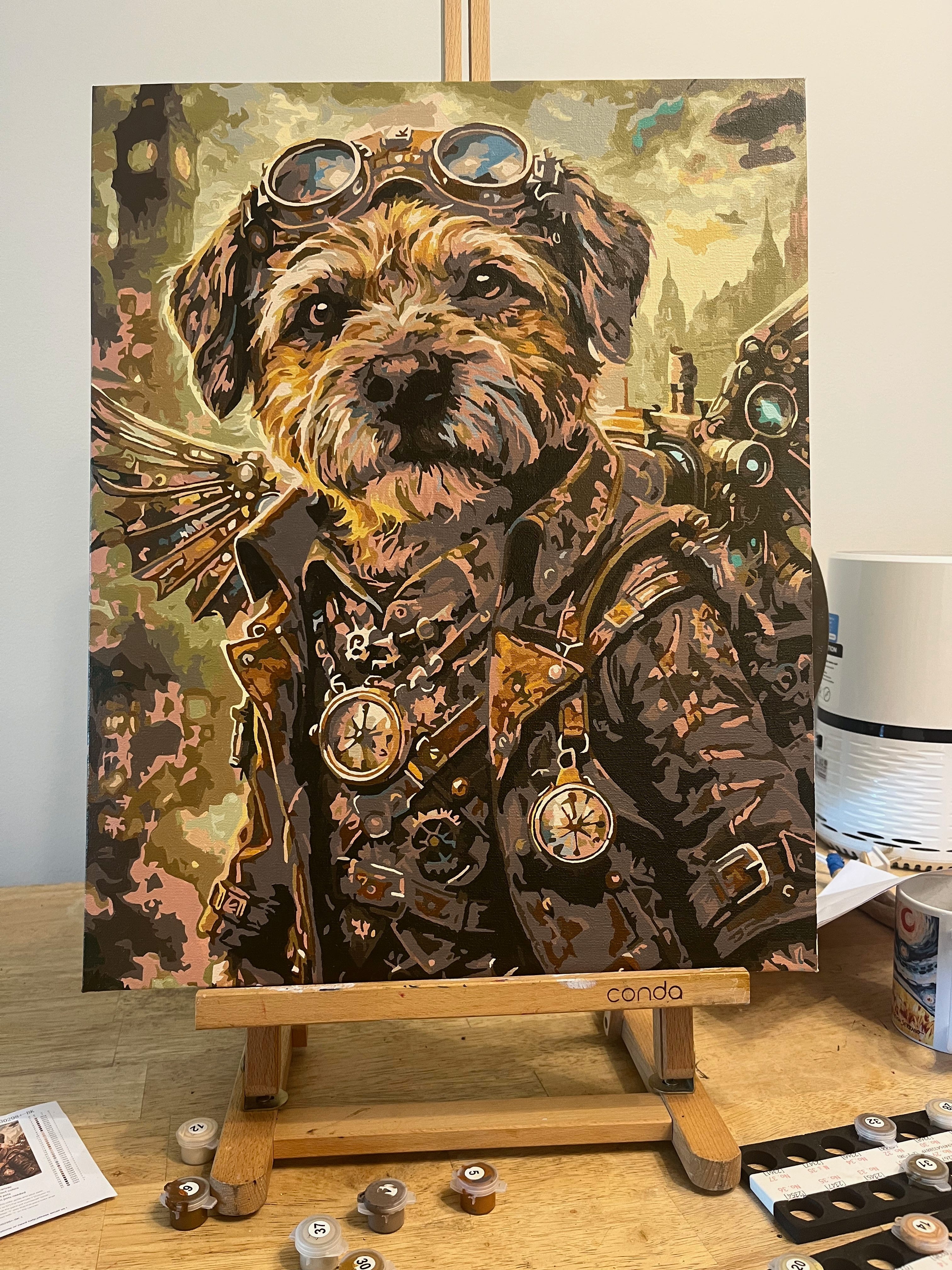
Example: Paint-by-number of Steampunk Lucy.
Purpose: I was offered a free custom paint-by-number kit from Davincified in exchange for a review and a post on social media. Also, because it’s a paint-by-number kit, I was using it as a way to centre myself after breakfast and plan my day.
Passion: While it was a project that I was happy to engage in, if the opportunity hadn’t come along, I would simply have found a different sort of paint-by-number kit to work on.
People: The finished painting was for my husband and me, as we were the ultimate audience for it; ours was the only opinion that really mattered.
Interestingly, these three P’s can also help navigate where your work fits on the Hobby, Job, Career, Vocation spectrum from my earlier resource, Choosing Creativity as a Vocation.
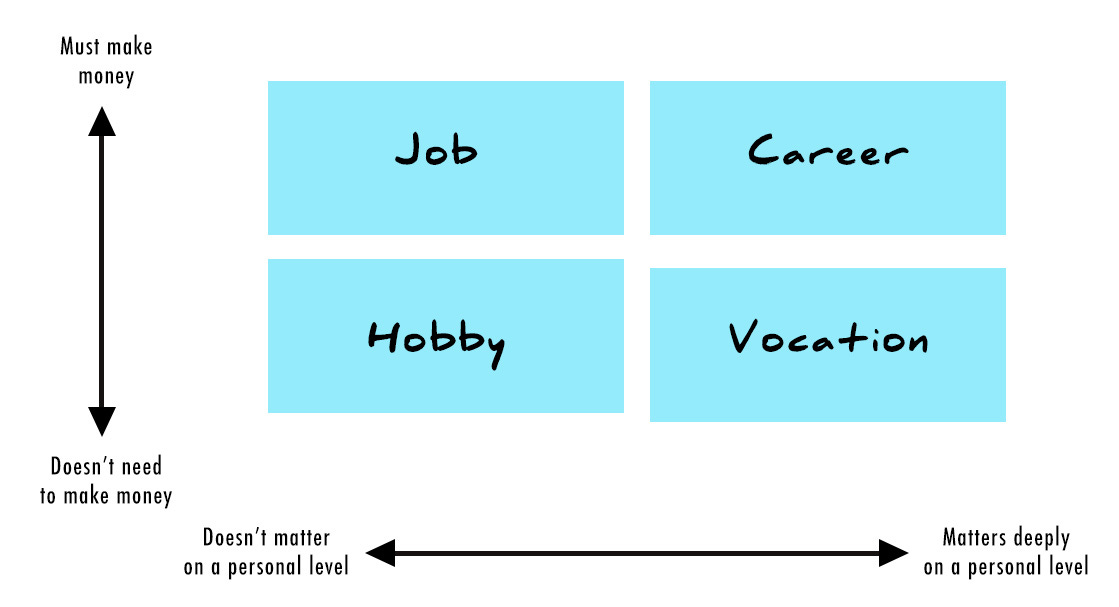
Referring back to this diagram, my paint-by-number work falls squarely into the “Hobby” in that it doesn’t make me money and doesn’t matter to me on a deeply personal level. Likewise, any feedback that I receive about this work doesn’t really need to be taken to heart.
However, what about work that falls into other categories?
Example: Designing a website for a client
I have designed many, many websites in my day, from tiny one-person operations to small businesses and non-profits. It was something I was good at, and it paid the bills, but I wouldn’t say that I had a burning passion for the work.
Purpose: To make a website that clearly promotes the work of the client
Passion: I want to do a good job, but ultimately, this is work that was instigated by someone else that I am being paid to do.
People: The website is for the client and the people that they serve.
Work such as this is very much in the “Job” category, and that strongly influences how I absorb that feedback.
The truth is, I have built websites that I personally thought weren’t the best-looking, and these came about largely because of feedback from the client. I would present them with a website that I thought looked good. They would respond with how they want it changed. If I think the changes aren’t in the best interest of the client, I will say so… but ultimately, the client is always right.
In situations like this, it is important not to invest a ton of passion or take negative feedback to heart because there will be times when I have to make things that I personally don’t like.
I think the most cringe-worthy website I ever designed had a navy blue background with these bevelled buttons in Christmas-like red and green. I still shudder when I see it in my mind’s eye, but that is specifically what the client wanted.
But that’s okay. That is the nature of doing creative work as a Job.

Example: Getting feedback on my novel
It’s difficult to say whether my novel-writing efforts are in the “Career” category or the “Vocation” category. Even though the results matter greatly and I have poured a huge amount of passion into the project over the years, I don’t know how much I need the novel to make money, which is the big differentiating factor between those categories.
Of course, I would like the novel series to make money, but I would still describe it as more of a passion project, even though I am trying to be smart about the marketing and money-making aspects.
Purpose: To publish a fantasy novel series and get the story I’ve been envisioning for so long in front of an audience
Passion: High. Very, very high. I have invested a great deal of time and effort into world-building and writing this story.
People: I’m writing this story for myself and for people who enjoy reading fantasy stories.
When you are getting feedback on an artistic effort that you are very passionate about, it is incredibly important to pay attention to where that feedback is coming from. You don’t want to take the feedback of random trolls on the internet too seriously, but you also don’t want to rely only on the glowing feedback of friends and family either.
You want to make the creative project better, and you want to be in the best possible headspace to improve that work.
In terms of feedback for the novel, I hired a development editor. More than that, I didn’t just hire any editor off the internet; I went to a friend who worked previously in the publishing industry and asked her for a recommendation. I knew this was a friend who believed in my writing and would point me to a professional.
I was nervous about putting myself out there, but at the same time, I was also hugely gratified when she sent the following to me as part of her feedback on the book.
Athena, congratulations on completing this highly entertaining novel! The quality of your writing is so high, and you have a real gift for evoking atmosphere/setting. Also, your characters are very well drawn, and I love the banter between Oren and Alexis.
~ Bev Katz Rosenbaum, Editor and Author
The editor also sent me about five pages of notes on structural and point-of-view changes that she’s suggesting I make, but I am completely fine with that. I chose where I was getting my feedback very carefully, and I am confident that the suggested changes will make the story better.
Note that if you can’t afford to hire a professional to give feedback, consider looking for someone who has skills in the subject area that you respect and who is going to give constructive feedback that is in your best interest.
Again, a random troll commenting on your Instagram post is not feedback that you should take to heart.

You don’t know them. They don’t know you. You don’t know their level of experience. They don’t know the purpose or the passion that you’ve put into a particular project. Whatever they throw at you—be it good or bad—isn’t something that needs to be taken in deeply.
Final Thoughts
When I was in animation school, I had an instructor or two who made me hate getting feedback. I was so incredibly passionate about creating animation at the time, and it stung deeply when my efforts were criticized.
It hurt because my attitude towards this work was so far out of alignment with the attitude of the instructors. In my mind, I was making passion projects that I was pouring my heart and soul into, and they were trying to prepare me for a job where the only goal was to crank out the required number of seconds of animation each day for a director and a studio that got the final say.
Remember those three P’s—purpose, passion and people—and you’ll save yourself a boatload of heartache.
Athena is an artist, writer and creativity coach who believes that anyone can benefit from a healthy creative practice.